Wing Chun 咏春◆Southern Lion Dance 醒狮◆UNESCO City of Gastronomy◆Dragon Kiln · est. 1506◆Birthplace of Cantonese Opera 粤剧◆Shiwan Ceramics 石湾陶◆The Shunde Kitchen 顺德菜◆1,300 years of history◆20 min from Guangzhou◆
Wing Chun 咏春◆Southern Lion Dance 醒狮◆UNESCO City of Gastronomy◆Dragon Kiln · est. 1506◆Birthplace of Cantonese Opera 粤剧◆Shiwan Ceramics 石湾陶◆The Shunde Kitchen 顺德菜◆1,300 years of history◆20 min from Guangzhou◆
01 — The short version
Why Foshan earns the detour.
Most travelers pass through on the way to Guangzhou. The ones who stop discover that the south's martial arts, opera, ceramics and — above all — its kitchen were quietly perfected here. Six numbers explain why.
Read top to bottom
1078The year the Ancestral Temple was first raised — Foshan has guarded its shrines for nearly a millennium.Northern Song Dynasty
50+Martial arts styles still practised in the city's parks at dawn. China officially calls Foshan its City of Kung Fu.Wing Chun · Hung Gar · Choy Lee Fut
2014The year Shunde — not Guangzhou — joined UNESCO's Creative Cities network as a City of Gastronomy.UNESCO Creative City
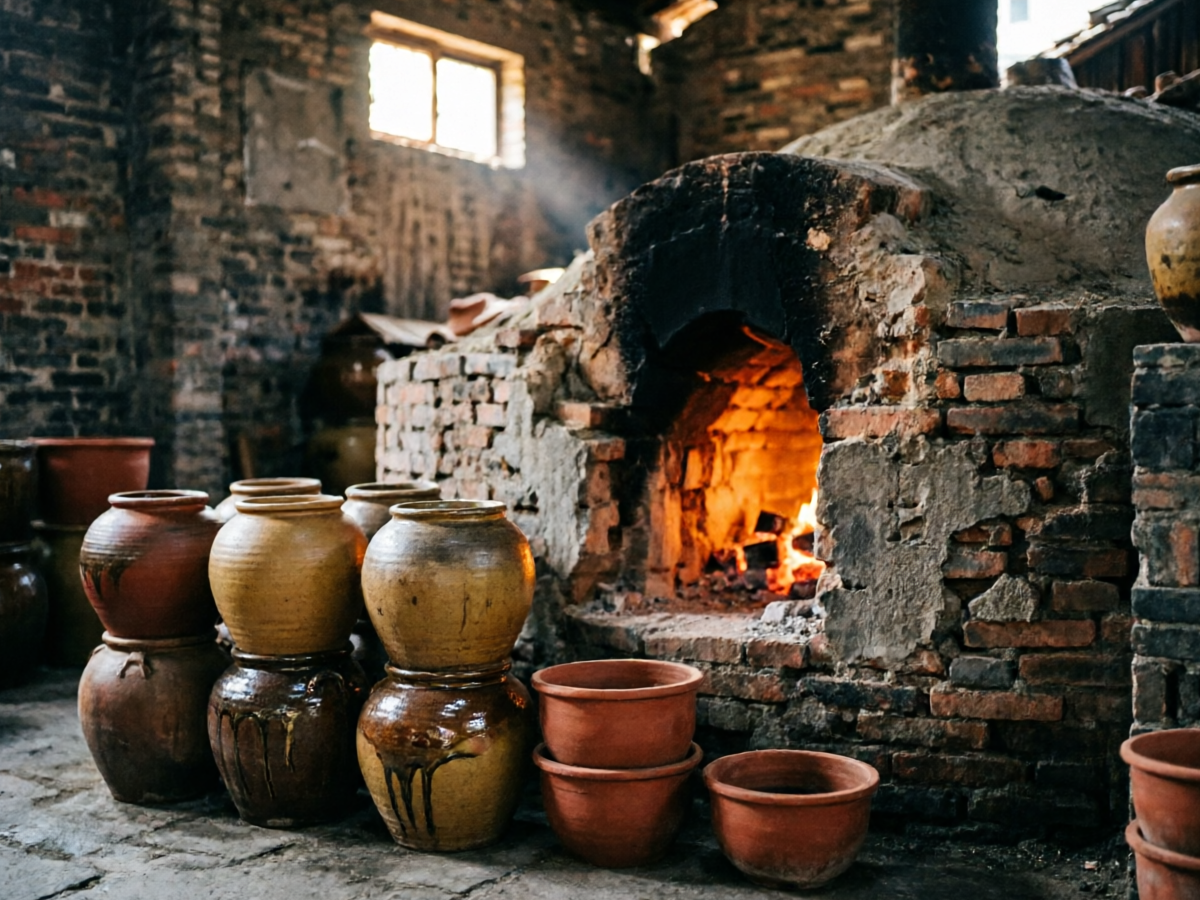
500Years the Nanfeng dragon kiln has burned without a single pause, lit in the Ming dynasty in 1506.Est. 1506 · Still firing
400Years of Cantonese opera, born in Foshan's red-boat guild halls and still sung on weekend stages.Qionghua Guild Hall
20Minutes to Guangzhou on the metro — Foshan and the provincial capital run as one delta metropolis.Guangfo Line · 23.02°N 113.12°E
02 — Where to go
Eight stops, three districts.
Filter by district · pin stops to your plan
Showing 8 of 8 · press + to pin
/01
Foshan Ancestral Temple佛山祖庙
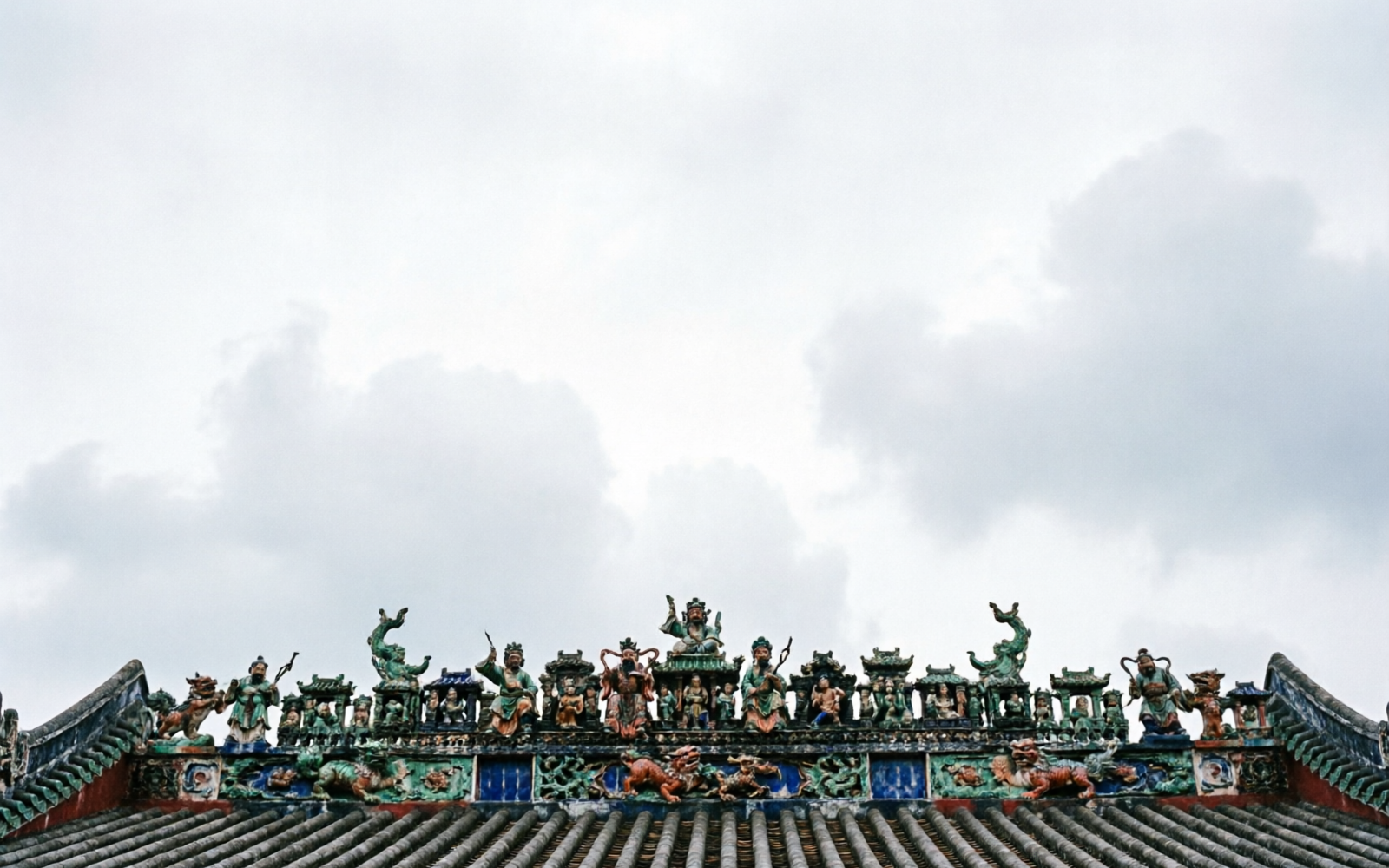
The city's thousand-year-old spiritual anchor — a Taoist temple, the Wong Fei-hung Memorial Hall and the Ip Man Hall in one walled compound, with ceramic ridge figures you'll crane your neck at.
¥20 entry · 2–3 hChancheng 禅城
◆ Lion-dance performances in the Wong Fei-hung square most days around 10:00 and 14:15 — arrive 20 minutes early.
/02
Lingnan Tiandi岭南天地
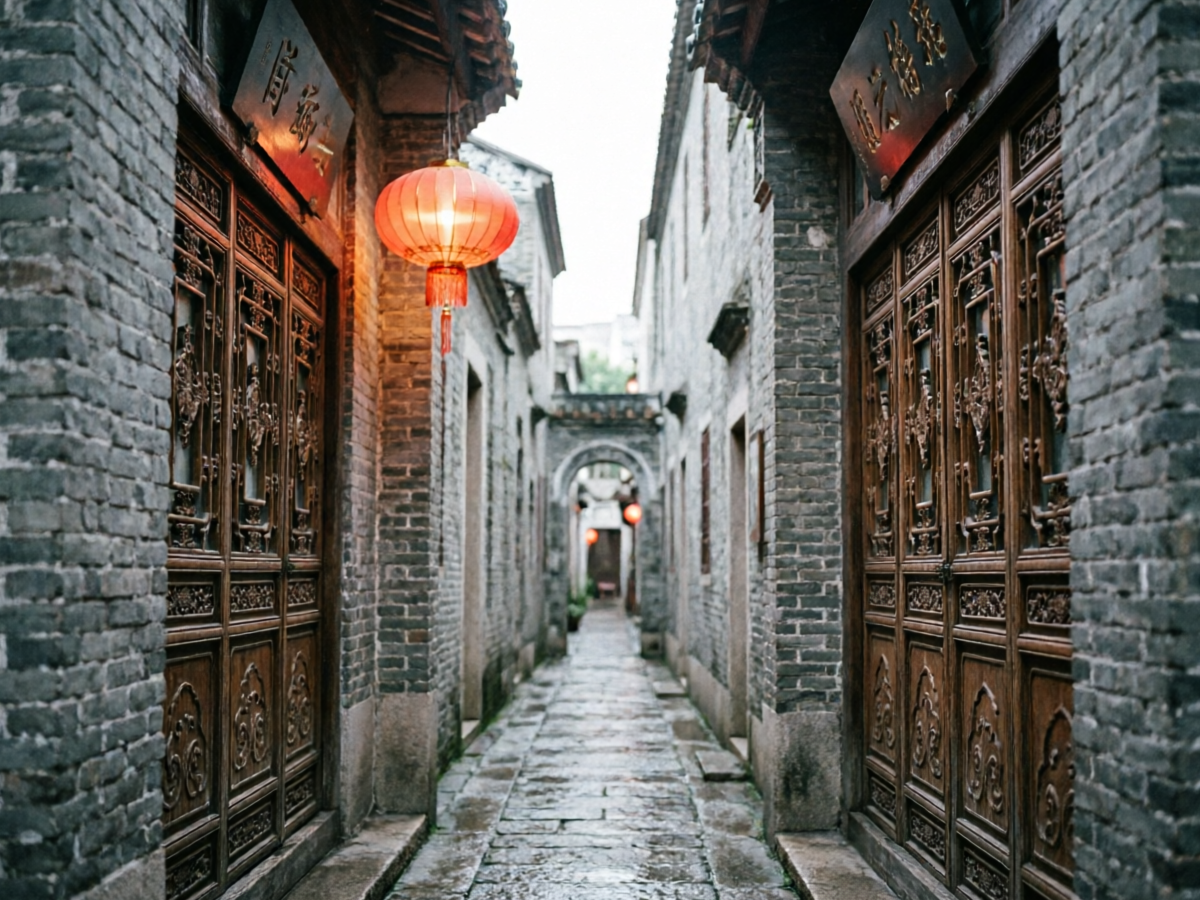
Qing-dynasty lanes, grey brick and ancestral mansions reimagined as cafés, galleries and boutiques. Foshan's prettiest square kilometre — and it sits five minutes from the temple gates.
Free entry · 2–4 hChancheng 禅城
◆ Come at dusk when the lanterns come on; the Jian family mansion courtyard is free to wander.
/03
Nanfeng Ancient Kiln南风古灶
A Ming-dynasty dragon kiln that has fired continuously since 1506. Watch potters work, then throw your own Shiwan pot at a workshop bench and have it shipped home after firing.
¥25 entry · half dayChancheng 禅城
◆ Pottery workshops start around ¥60 including firing and shipping — book on arrival.
/04
Cantonese Opera Museum广东粤剧博物馆
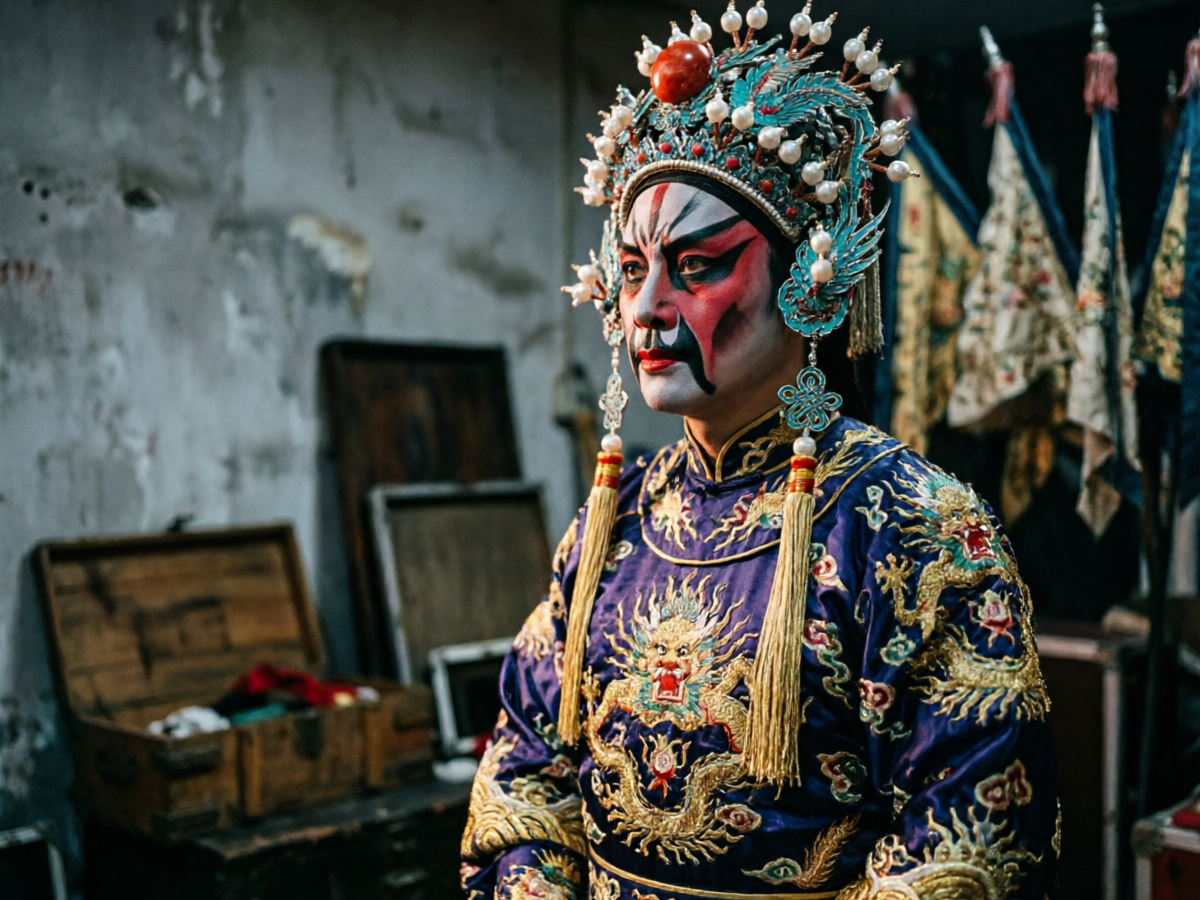
Foshan is the cradle of Cantonese opera. This museum in a restored guild-house traces 400 years of red-boat troupes, painted faces and embroidered costumes — with weekend live shows.
Free (passport) · 1–2 hChancheng 禅城
◆ Closed Mondays. Weekend matinées are announced at the door — a rare chance to hear live opera.
/05
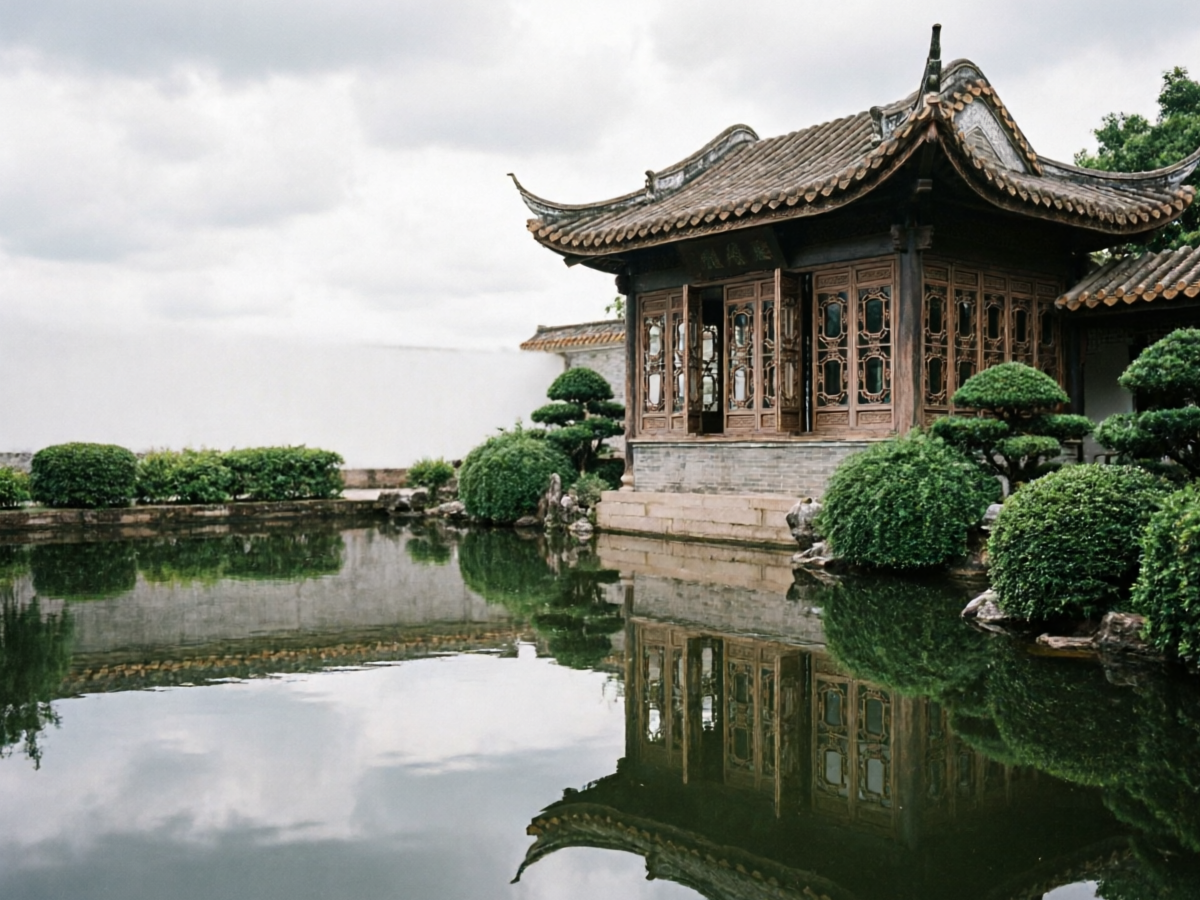
Qinghui Garden清晖园
One of Guangdong's four great classical gardens: carp ponds, boat-halls, stained-glass lattice and lychee shade, layered by one family since the Ming dynasty. Small, perfect, unhurried.
¥15 entry · 1.5–2 hShunde 顺德
◆ In Daliang, the old Shunde county seat — pair it with the Huagai Road snack street two blocks away.
/06
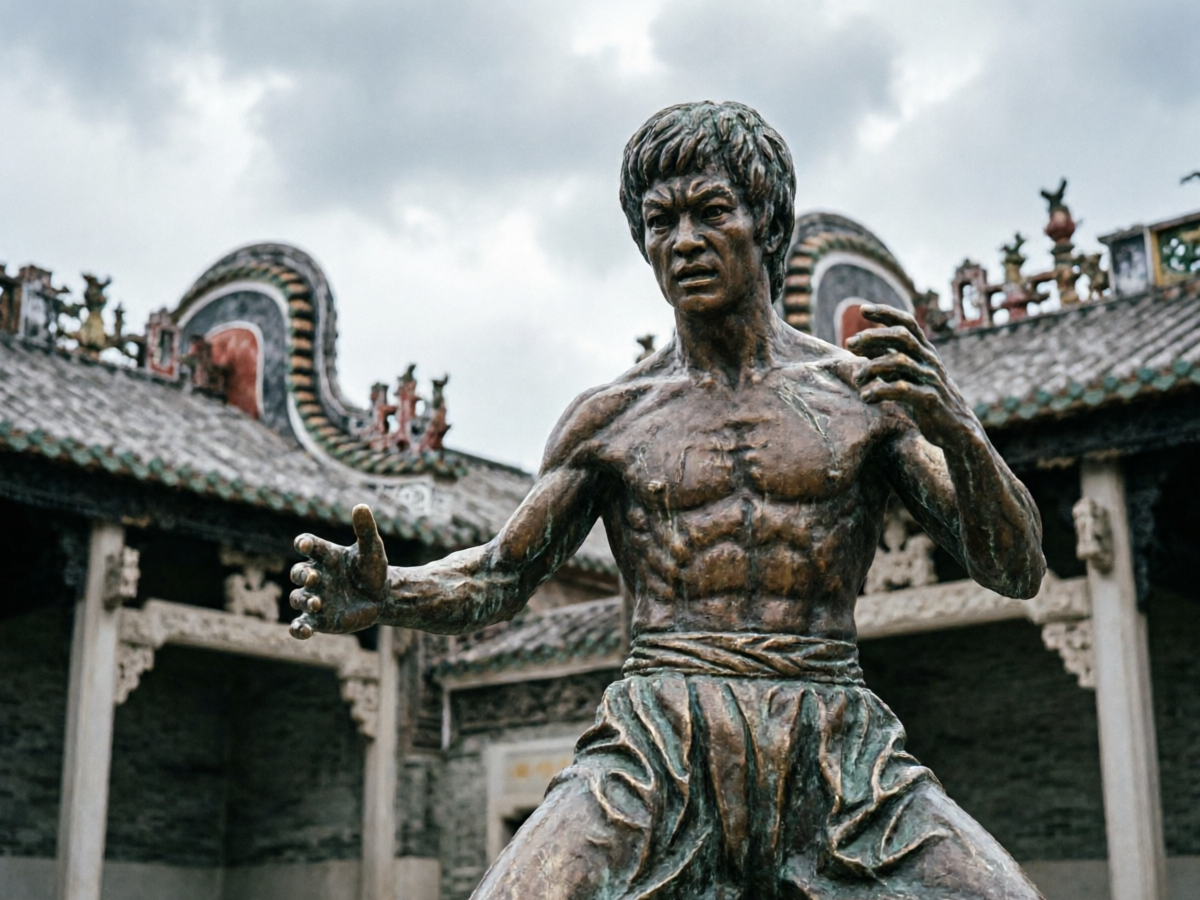
Bruce Lee Hometown李小龙故里
Jun'an, a water town of banyans and canals, celebrates its most famous son: the Lee ancestral hall, a striking bronze statue and a riverside park built around the Little Dragon's legend.
Free–¥30 · half dayShunde 顺德
◆ Combine with a Jun'an steamed-pork dinner — the dish is practically civic heritage here.
/07
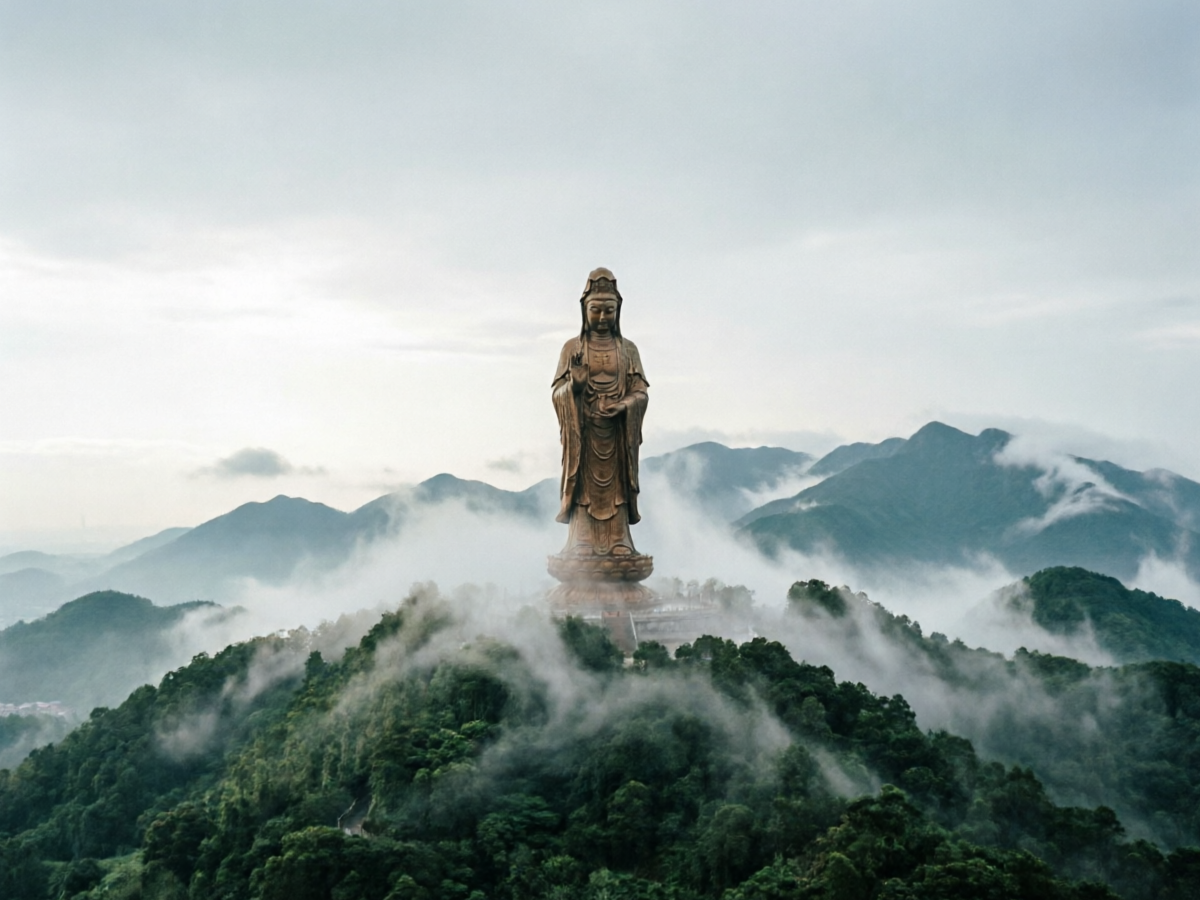
Xiqiao Mountain西樵山
A dormant volcano of 72 peaks crowned by a 62-metre bronze Guanyin. Waterfalls, mossy temples, cloud-piercing viewpoints — the classic full-day escape that locals still love.
¥70 entry · full dayNanhai 南海
◆ Cable car up, walk down past the waterfalls. Last entry is mid-afternoon — start early.
/08
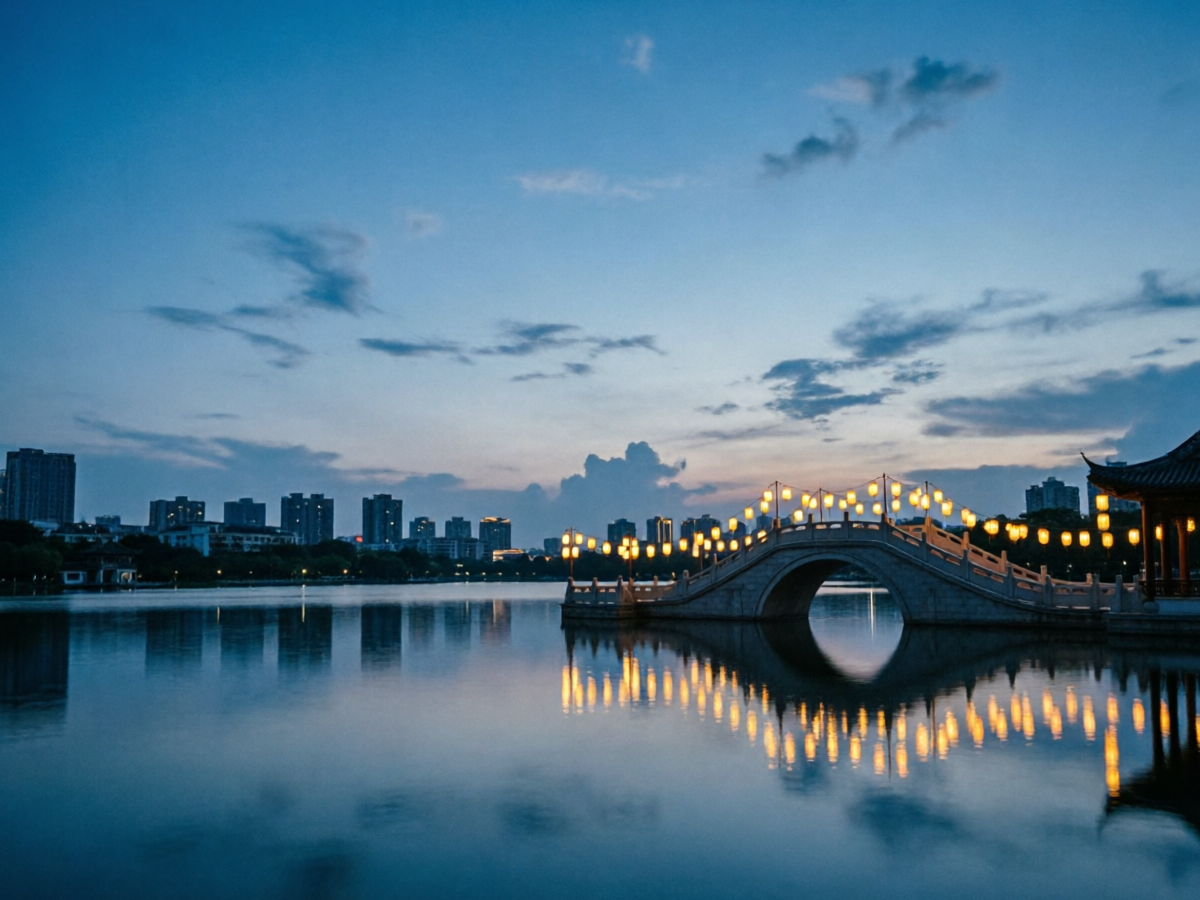
Qiandeng Lake千灯湖
The modern face of Foshan: a lantern-lit lake park ringed by towers, cycle paths and late-night dessert stalls. The perfect low-effort evening — walk the loop and watch the city switch on.
Free · 1–2 hNanhai 南海
◆ Best after dark when the light installations come on; the Guicheng metro stop drops you at the water.
Pinned stops collect in My Plan at the bottom of the page, with rough hours on the ground so you can sanity-check your days before you fly.
03 — The route
Three days, no wasted steps.
Old town → Shunde table → hills & water
09:00
Foshan Ancestral Temple
Doors open — wander the shrines, then hold your ground in the Wong Fei-hung square for the ~10:00 lion-dance show.
Culture2.5 h
12:00
Lunch in Lingnan Tiandi
Eat among the grey-brick lanes; the Jian family mansion courtyard is free to wander between courses.
Food2 h
14:30
Nanfeng Ancient Kiln
See the dragon kiln that's burned since 1506, then throw a pot of your own at a Shiwan workshop bench.
Craft2.5 h
17:30
Shiwan old streets
Browse ceramic studios and rooftop-figure shops as the kiln quarter goes golden.
Shopping1 h
19:00
Dinner: pressed pig trotter
Order 酝扎猪蹄 at a Chancheng old-name house, with a cold Pearl River beer and stir-fried choy sum.
Food1.5 h
08:30
Chencun noodle breakfast
Rice ribbons with soy and shallot oil — a century-old recipe and the correct way to start the day.
Food1 h
10:00
Qinghui Garden
Ming-dynasty ponds, lattice glass and lychee shade. Small enough to savour slowly.
Culture1.5 h
12:30
Yu sheng lunch in Daliang
River-carp sashimi tossed table-side with a dozen herbs. Book ahead at a well-reviewed house.
The ancestral hall, the bronze Little Dragon and a slow canal-side walk through the banyans.
Culture2 h
19:00
Jun'an steamed pork dinner
Whole-pig banquet cooking, salt-rubbed and sliced thin. Order the lotus-leaf rice too.
Food1.5 h
08:00
Xiqiao Mountain
Cable up, hike down past waterfalls to the 62-metre bronze Guanyin watching over 72 peaks.
Nature4 h
12:30
Lunch in Xiqiao town
Mountain-fed tofu and river fish in the town at the foot of the trails.
Food1.5 h
15:00
Cantonese Opera Museum
400 years of red-boat history in a restored guild-house. Weekend matinées are a bonus.
Culture1.5 h
17:30
Qiandeng Lake at dusk
Walk the lantern loop as the towers switch on; rent a bike if your legs survived the mountain.
Evening1.5 h
19:30
One last double-skin milk
Because you can, and because the train tomorrow doesn't have any.
Food0.5 h
04 — The table
Eat like Shunde taught you.
UNESCO City of Gastronomy · since 2014
Shunde — not Guangzhou — is where Cantonese cooks send their children to learn. The local saying goes 食在广州,厨出凤城: "eat in Guangzhou, but the chefs come from Fengcheng," Shunde's old name. The rules are few: follow the queues, order what the table next to you has, and arrive hungry twice a day.
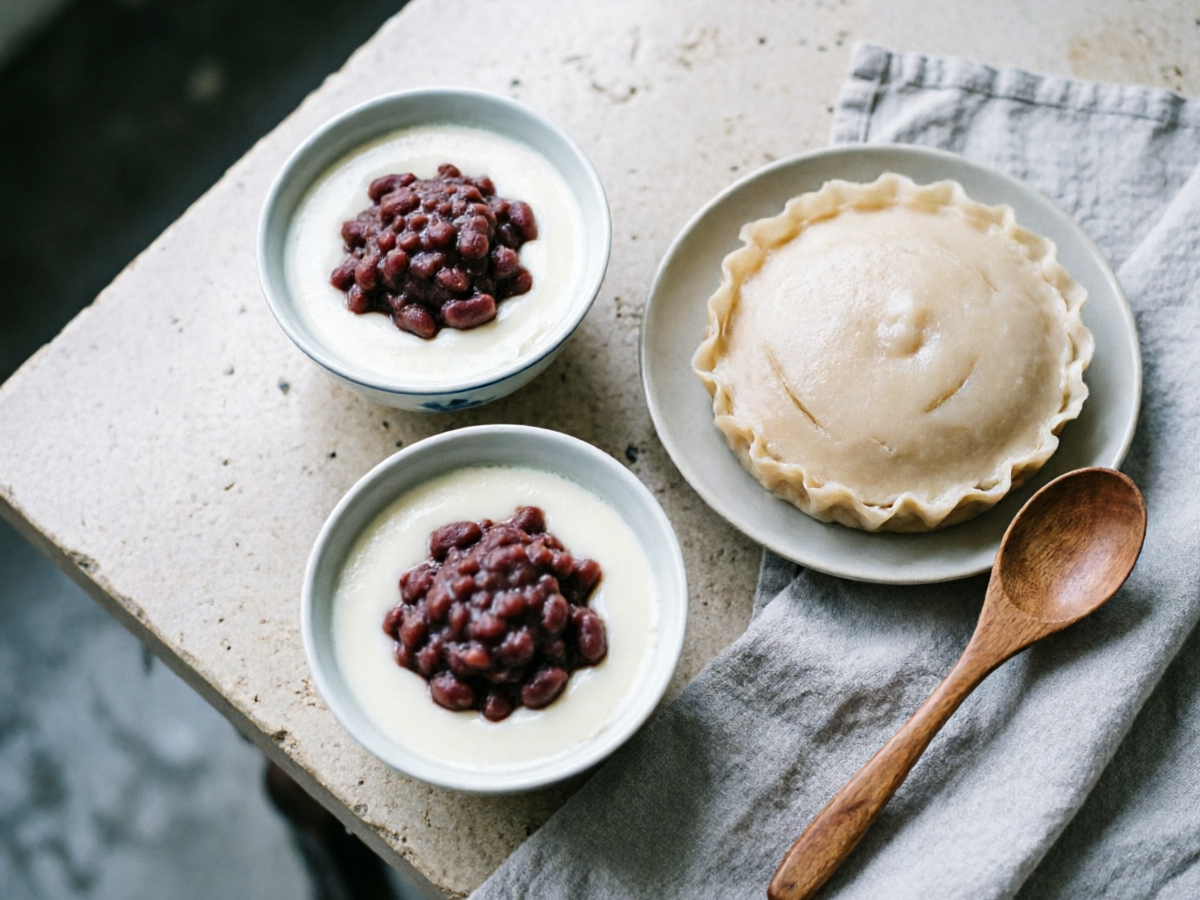
Double-skin milk, Daliang双皮奶 · FIG. 02
Street-level prices · ¥1 ≈ US$0.14 · round up for joy
Double-skin milk双皮奶
¥12
Buffalo milk steamed twice into a trembling, barely-sweet custard. Order it warm at Renxin, where it was invented.
◆ Daliang · Shunde
Blind Man's Cakes盲公饼
¥15 / box
The city's 200-year-old keepsake biscuit — sesame, peanut and a whisper of clove. Tastes like old Foshan.
◆ Chancheng
Chencun noodles陈村粉
¥18
Rice ribbons a millimetre thin, silked with soy sauce and shallot oil. One family has guarded the recipe for a century.
◆ Chencun · Shunde
Jun'an steamed pork均安蒸猪
¥48
Whole pig salt-rubbed and steamed over open vats, sliced thin. The banquet centrepiece of Shunde weddings.
◆ Jun'an · Shunde
Fish yu sheng顺德鱼生
¥68
River carp sashimi tossed table-side with a dozen herbs, oils, peanuts and crisps. Brave, cold and brilliant.
◆ Shunde
Daliang beng sha大良蹦砂
¥10
Golden butterfly crackers, sweet-salty and shattering. Best eaten warm from the street oven, still crackling.
◆ Daliang · Shunde
Pressed pig trotter酝扎猪蹄
¥38
Foshan's lacquered, deboned, pressed trotter served cold — the 200-year-old signature of old-name houses like Dexinzai.
Double-skin milk appears at the end of every meal "just to try." It is never just to try. Plan your Shunde day around stomach capacity, not opening hours.
狮
05 — The crafts
Hands that made the south.
Five living traditions — still practised, still taught
Wing Chun was refined in these alleys; Wong Fei-hung was born here, Ip Man taught here, and Bruce Lee's family hails from Jun'an in Shunde. Around fifty styles are still practised in Foshan's parks at dawn — follow the sound of wooden dummies and you'll find a class.
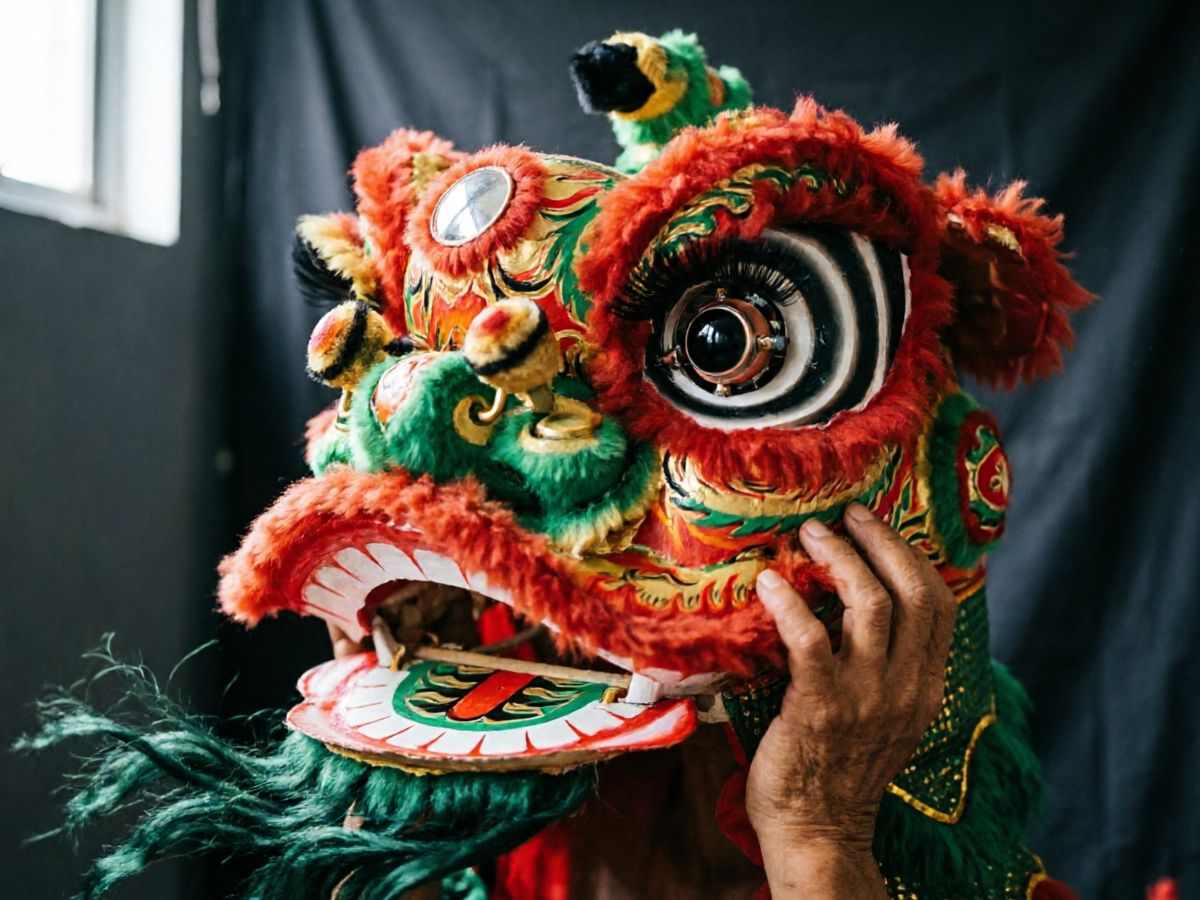
Foshan's southern lions are papier-mâché, bamboo and a thousand hand-painted patterns, and they open every festival from shop blessings to weddings. The acrobatic high-pole show at the Ancestral Temple is the most reliable place to see the craft at full speed.
The "pottery capital of the south" glazes ridgeline figures and miniature scholars in flowing sancai colours — the temple roofs you admired were made a few streets from the kilns. Nanfeng has burned without pause since 1506; the workshop benches are open to visitors.
The Ming-dynasty Qionghua Guild Hall put Foshan at the birth of Cantonese opera. Troupes once sailed the Pearl River delta on red-painted boats, and the art's earliest academies sat within sight of the ancestral temple.
Each autumn Foshan stages one of China's great folk parades: woodblock New-Year prints, paper lantern floats, stilt dancers and lion troupes moving through the old town after dark. If your trip lands in October or November, ask your hotel for the route.
"If you want to understand the south, don't read about it — stand next to a drum at a shop opening."
All five traditions are working crafts, not museum pieces: morning classes in the parks, kilns firing on weekdays, opera troupes booked for weddings. Ask your hotel what's on — something always is.
06 — Logistics
Know before you go.
Arrival · timing · money · questions
Getting there
01
Fly to Guangzhou
Baiyun Airport (CAN) is Foshan's airport, about 50 km away. Foshan itself has none — and doesn't need one.
02
Take the metro in
Guangfo Line plus Line 3 run straight into Chancheng old town in 60–80 minutes for ¥10–15. Alipay works at the gates.
03
Or arrive by rail
Foshan West (佛山西站) links Shenzhen, Hong Kong West Kowloon and most of southern China by high-speed rail.
The five districts: Chancheng 禅城 is the old-town core; Nanhai 南海 wraps the north with mountains and lakes; Shunde 顺德 is the kitchen; Sanshui 三水 and Gaoming 高明 are the green escapes for repeat visitors.
When to come
JFMAMJJASOND
Oct–Dec · best — dry, 18–26°C, festival season
Mar–Apr · good — lush and misty
Jun–Sep · hot, humid, typhoon afternoons
钱Money
RMB only. WeChat Pay and Alipay rule — link a foreign card before landing. Carry ¥200 cash for street stalls and temple tickets.
用Apps
Gaode (Amap) for maps, Trip.com for trains and hotels, WeChat for everything else, Pleco for offline characters.
语Language
Cantonese first, Mandarin everywhere, English rarely. Screenshot addresses in Chinese characters and show the screen.
签Visa
144-hour visa-free transit via Guangzhou Baiyun covers all of Guangdong — Foshan included — for 54 eligible passports.
Field questions — asked by every traveler
Two full days cover the essentials: old-town Chancheng and one Shunde food day. Serious eaters and hikers add a third for Xiqiao Mountain and the lake. Foshan rewards slow eating more than fast sightseeing.
Easily — the Guangfo metro puts Chancheng old town 40–60 minutes from central Guangzhou. But the best of Foshan (kiln workshops, opera matinées, late-night dessert streets) happens after 5 pm, so stay at least one night if you can.
English is thin outside big hotels. The fix is simple: save addresses in Chinese characters, use Gaode (Amap) for navigation, and let your hotel call taxis. Pointing at the table next to you works in every restaurant.
October to December: dry, clear, 18–26°C and festival season. March–April is lush and misty. July–September is hot, humid and typhoon-prone — plan indoor kilns and museums for rainy afternoons.
Foshan is gentle on the wallet: street food ¥10–30, temple and garden entries ¥15–25, a comfortable hotel ¥300–600 a night. A generous all-in day runs around ¥400–600 per person.
Yes. China's 144-hour visa-free transit via Guangzhou Baiyun Airport covers the whole of Guangdong province — Foshan included — for 54 eligible passports. Keep your onward ticket handy.
My Foshan plan (0)
Nothing pinned yet.
Browse the places above and press + on anything that tempts you — your shortlist will wait for you here.